An agent can write a patch while you sleep. That is the part everybody wants to talk about. The patch still needs dependencies installed, a test matrix run, containers built, artifacts stored, and a green check before it can touch the branch you care about. All of that is metered compute.
The CI bill has become a dependency of software creation. It sits inside the feedback loop between an agent’s proposed change and its next attempt, where a slow job means an idle agent and an expensive job means a machine can iterate only until someone notices the invoice.
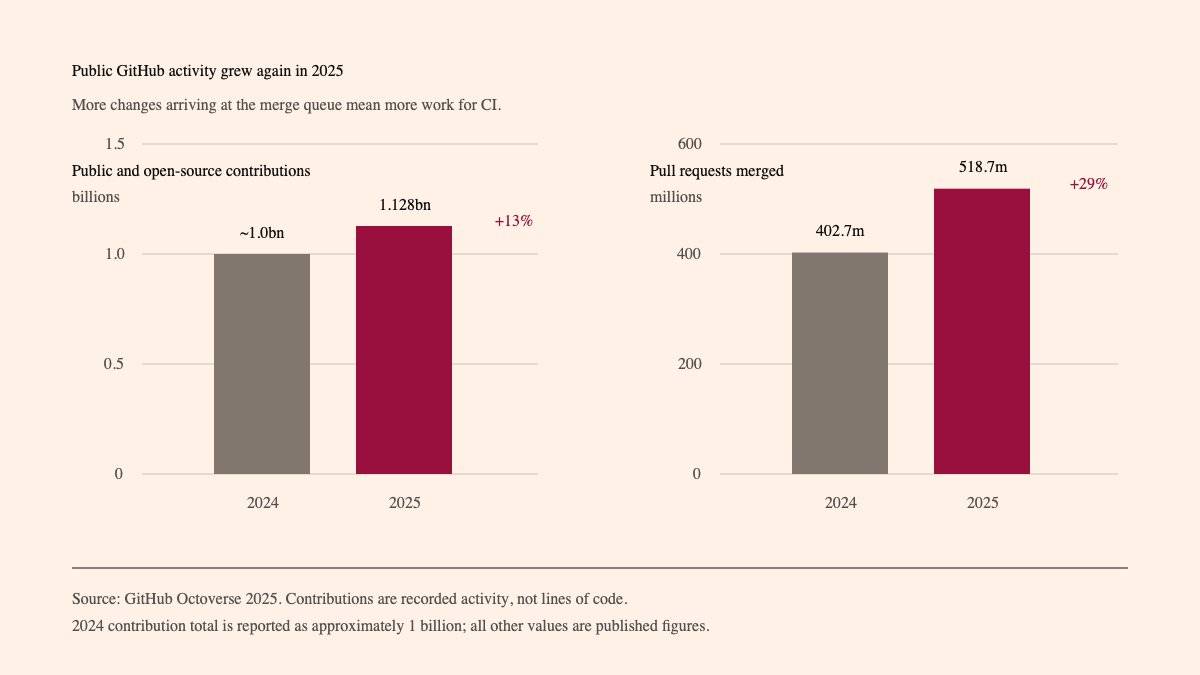
GitHub already documents the mechanism in plain language. On private repositories, Copilot code review consumes GitHub Actions minutes. Anyone with write access can trigger an Action, and usage above an included allowance is charged to the repository owner. An agent loop merely makes that meter run more often.
This matters to us at TextCortex. We build and run agentic workflows. More proposed changes mean more test runs, more cache restores, and more failed attempts that have to be made green. The old picture of CI as a final tollbooth underestimates the load. It is now part of the factory floor.
The claim that agents write more tests has not earned its number.
Code generation can create a great deal of test code. It can also create a patch with no useful test at all, or a test that asserts the implementation’s mistake. I do not have a public corpus that proves an average agent produces more tests than a human, and I will not manufacture one for a marketing sentence.
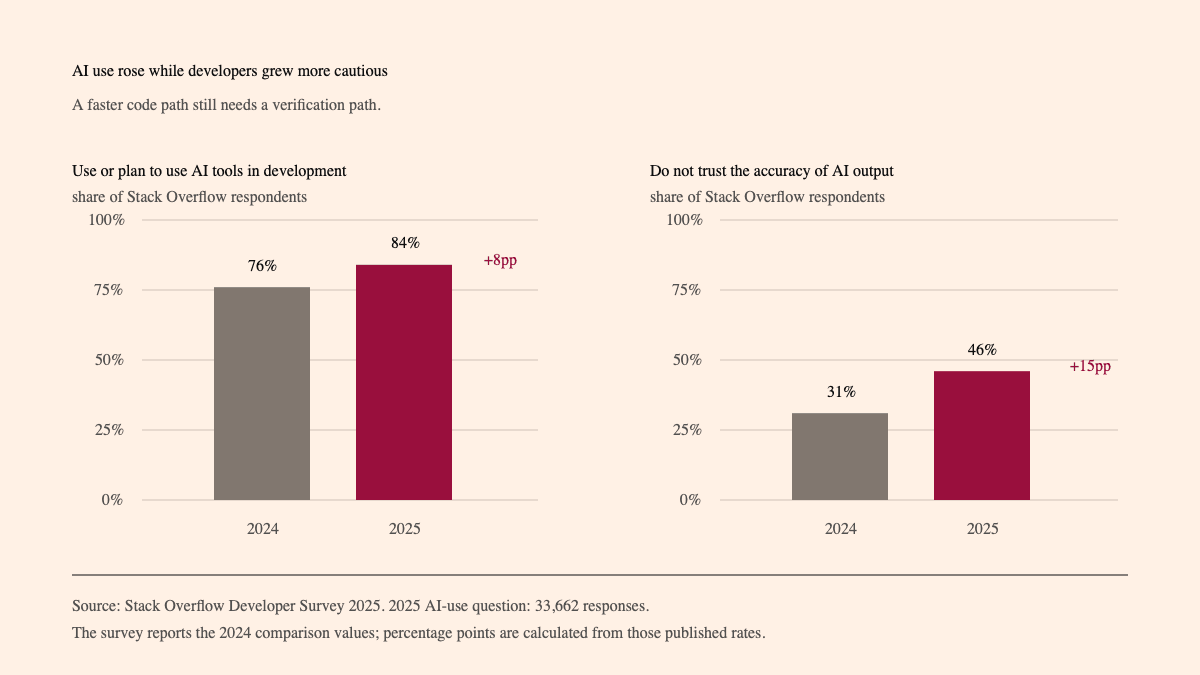
The operational conclusion survives without that statistic. Every proposed change needs evidence before merge. An agent that can propose changes quickly turns CI duration, capacity and cost into constraints on how quickly it can learn. That is enough reason to care about runners.
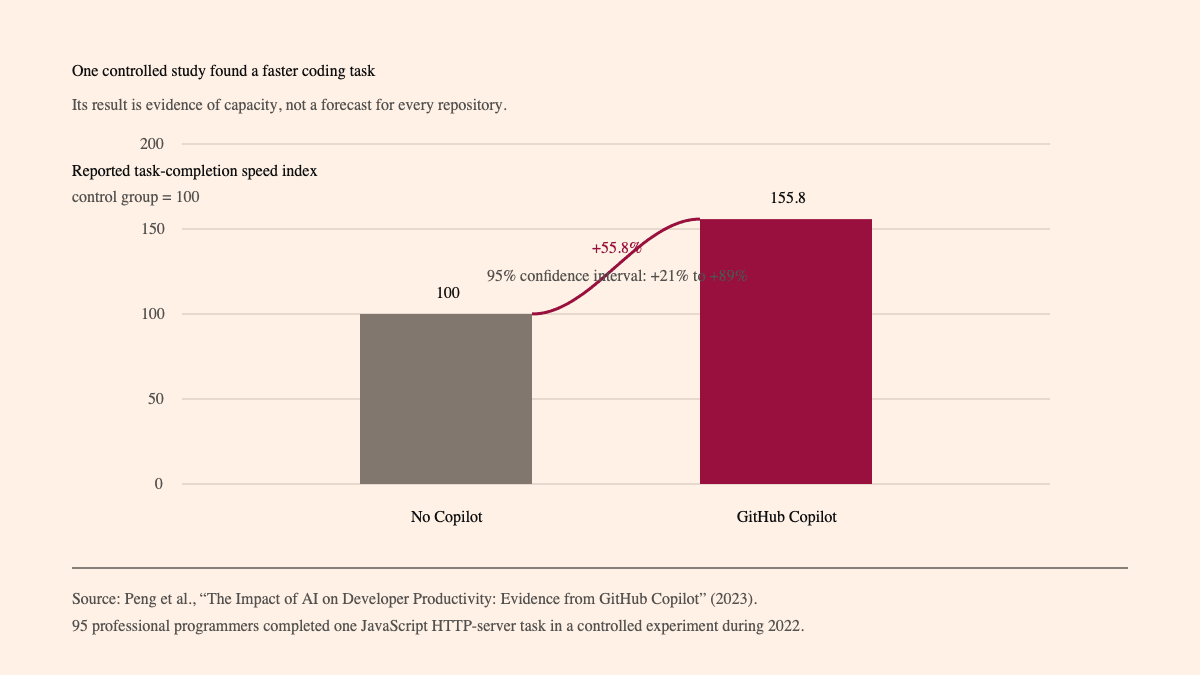
Runnerhut makes the price-performance case in plain numbers.
Runnerhut is a managed GitHub Actions runner service.
You authorise its GitHub App, replace a job’s runs-on label, then keep the
Actions, secrets and permissions already in your workflow. Its
documentation shows the one-line migration.
Managed caching, persistent Docker builders, per-workflow analytics and
EU-hosted compute arrive with it.
Runnerhut publishes a 2-vCPU price comparison against GitHub-hosted runners. These are the prices on its rate card in August 2026. Windows and macOS are half the listed GitHub-hosted rate. Linux x64 is half the price and Linux arm64 is 36% lower.
| Runner type | GitHub-hosted / min | Runnerhut / min | You save |
|---|---|---|---|
| Linux x64 | $0.0080 | $0.0040 | 50% |
| Linux arm64 | $0.0050 | $0.0032 | 36% |
| Windows | $0.0160 | $0.0080 | 50% |
| macOS | $0.0800 | $0.0400 | 50% |
Runnerhut adds fast starts, 1 GB/s cache restore and persistent Docker builders to those lower rates. Its product page lists a 3-second runner start and twice-faster pipelines. Lower runner rates make every CI minute cheaper. Faster builds consume fewer of those minutes in the first place.
Runnerhut also bills per second after a one-minute minimum, with no cache, egress, queue-time or concurrency charge. The free tier includes 3,000 Linux minutes a month, enough to move a real workflow and watch the numbers before you commit to a new CI bill.
Runnerhut turns faster CI into a smaller bill.
The price and duration multiply. A runner at half the per-minute rate that finishes the pipeline in half the time cuts compute spend by four. Runnerhut optimises cache throughput, runner start time and Docker layers alongside the per-minute price because a green pipeline matters more than an inexpensive slow minute.
The service keeps GitHub Actions familiar. Install the GitHub App, swap the
runs-on label, then keep your actions, secrets and permissions exactly as
they are. Runnerhut adds managed caching, persistent Docker builders,
per-workflow cost analytics and EU-hosted compute without forcing a separate CI
product into the team.
Your agent loop needs CI that keeps up.
There is no mystery in the compounding. A pull request produced by an agent needs a test run. A failure leads to another patch and another test run. A matrix multiplies the work. A flaky test adds a rerun. The bill follows the loop, and so does the time between useful decisions.
Reliable CI has a boring job: start predictably, restore what the job needs, run the same workflow it ran yesterday, report the cost, and get out of the way. Runnerhut’s one-line migration keeps that job small. Teams can trial it without rewriting their pipeline or moving their deployment process to a new control plane.
At TextCortex, the bill made the case for us. In the billing period immediately before we migrated our CI workflows to Runnerhut, we paid about €3,000 for GitHub Actions.
Runnerhut cut that spend drastically for us and made the CI/CD pipeline faster and easier to operate. Runners start predictably, caches stay warm, and the team can see what each workflow costs instead of treating the CI bill as a monthly surprise.
Agentic development will keep increasing the code and test work flowing through CI. Runnerhut gives that workload a simple home: the same GitHub Actions workflow, faster runners, lower compute rates and a bill that stays legible as the number of jobs grows.
That is why we moved TextCortex. CI had become production infrastructure for our agents. Runnerhut made it cheaper and faster without turning migration into another engineering project.